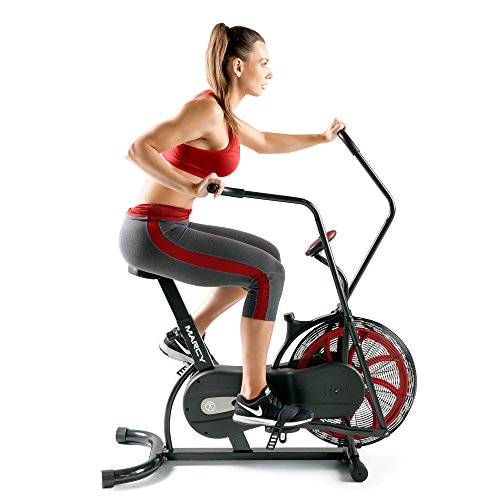
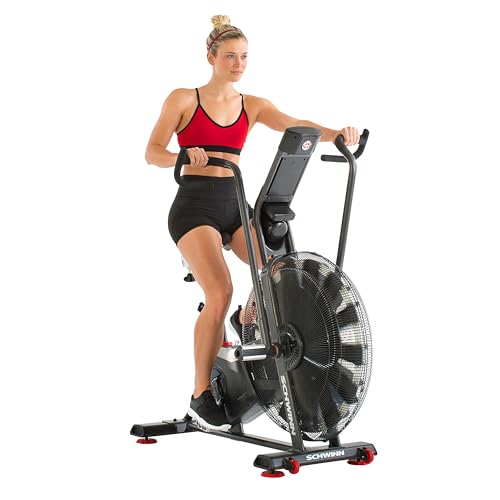
"Air bike" and "fan bike" describe the same piece of equipment — a stationary bike where a large fan wheel provides resistance instead of magnets or friction pads — and it's a genuinely different category from the upright and recumbent bikes in our stationary bike guide. The defining feature is that resistance scales with your effort: pedal harder and push the handlebars more, and the fan pushes back harder. There's no dial to set and forget, which makes these bikes a favorite piece of equipment in the HIIT and Hyrox world, where short, all-out efforts are the point.
Why Athletes Like Self-Regulating Resistance
Because resistance is proportional to effort, an air bike self-regulates in a way a fixed-resistance bike can't: an all-out 20-second sprint feels genuinely brutal, while easy zone 2 pedaling stays easy, all on the same setting. That range — from recovery-pace spinning to a max-effort interval that taxes your VO2 max — is why these bikes show up so often in interval and conditioning programming rather than steady-state cardio setups.
What Actually Differs Between Models
- Frame and flywheel size. Bigger fan wheels generally produce smoother, more linear resistance at high effort, but also cost more and take up more floor space.
- Handlebar type. Dual-action handlebars (which move with the pedals) let you train your upper body simultaneously — most air bikes have this, but it's worth confirming.
- Console features. Basic models show only speed/time/calories; "smart" consoles add app connectivity, programmed intervals, and more detailed metrics.
- Build quality and stability. Heavier, sturdier frames handle repeated max-effort sprints better over years of use — this is usually where the price difference between entry and premium models actually goes.
Our Picks
Marcy Fan Exercise Bike with Air Resistance System
$264.99
The entry point into true air-resistance training. It won't have the smart console or the ultra-smooth flywheel feel of a premium model, but it delivers the core mechanism — effort-proportional resistance — at a price that makes sense if you're not sure yet whether this training style is for you.
Sunny Health & Fitness Smart Heavy-Duty Fan Bike
$699.99
A mid-range step up in both build quality and features — a heavier-duty frame built to handle repeated sprint intervals, plus smart connectivity for tracking workouts. A sensible landing spot if you already know you'll use this regularly for HIIT-style training.
Schwinn Fitness AD7 Airdyne Bike
$1,099.99
The Airdyne name is essentially synonymous with the category — this is the reference product most gyms and CrossFit boxes use, and it's built to take years of max-effort abuse without the resistance mechanism degrading. It's the premium pick for a reason: if you want the bike that set the standard everyone else is compared to, this is it. Availability has been running low on this model — if it's in stock when you check, don't wait to buy, since it may sell out.
Who Should Skip an Air Bike
If your training is mostly steady-state, low-intensity cardio, a quieter magnetic-resistance upright or recumbent bike (see our stationary bike guide) will be more comfortable and considerably less noisy — air bikes are genuinely loud under load, which matters if you're training in a shared space or an apartment.
The Bottom Line
Start with the Marcy if you're testing whether interval-style air bike training fits your routine. Go Sunny Health & Fitness if you already train HIIT or Hyrox-style conditioning regularly and want a bike that will hold up to it. Choose the Schwinn Airdyne if you want the category's reference standard and don't mind paying for it.