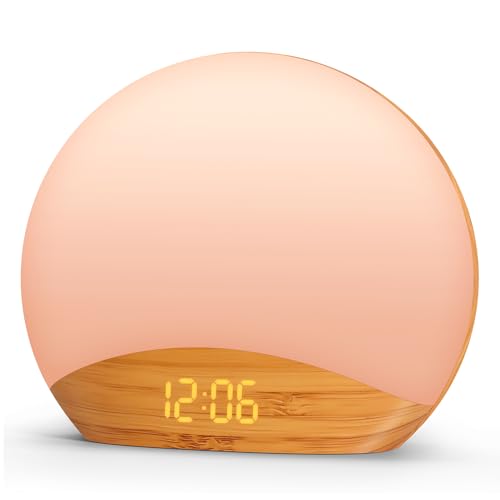
If you've ever fixed your sleep environment by blocking out every stray photon — blackout curtains, an eye mask, the works — you've probably noticed the flip side of that problem: waking up in a pitch-black room to a jarring beep is its own kind of rough. Sunrise alarm clocks take the opposite approach. Instead of managing light to help you fall asleep, they manage light to help you wake up, simulating a gradual dawn in the twenty to thirty minutes before your alarm goes off so your body eases into morning instead of getting yanked into it.
How Light-Based Waking Actually Works
Your circadian rhythm — the internal clock that governs when you feel alert versus sleepy — takes a lot of its cues from light hitting your eyes. A sudden alarm in a dark room wakes your ears before it wakes anything else; a gradually brightening light wakes your visual system on a curve that more closely resembles a real sunrise. That's the whole mechanism: no sound needed to start the process, just a slow ramp in light intensity (and usually color, moving from warm amber to fuller white) that nudges your body out of deep sleep stages before the audible alarm even kicks in.
This is especially useful in winter, when a lot of people are waking up in genuine darkness, or for anyone on a schedule that doesn't line up with the actual sunrise — shift workers, early risers, or anyone in a bedroom that stays dim year-round. It's the same underlying idea behind bright-light therapy boxes used for seasonal low mood, just applied at the moment you wake up rather than during the day.
What to Look For
- Light range and dimming curve — look for a wide brightness range and a gradual ramp (20–30 minutes is typical), not a light that just flips on.
- Color temperature simulation — the better units shift from a deep amber/red through orange to a bright, full white, mimicking an actual sunrise rather than just getting brighter.
- A backup sound alarm — light alone doesn't wake everyone, so a natural-sound or FM radio backup matters, especially for deeper sleepers.
- Sunset/wind-down mode — some models reverse the effect at bedtime, dimming gradually to help you settle in, which is a nice bonus if you're building an evening routine.
- Controls you'll actually use — a bedside dial or simple buttons beat a fussy app if you're operating it half-asleep.
Who Should Consider One
Sunrise alarm clocks are a good fit if you wake up in a dark room, if a blaring alarm leaves you groggy or irritable, or if you're trying to get on a more consistent wake time without relying purely on willpower. They're not a substitute for actual sunlight exposure during the day, and they won't fix a genuinely disrupted sleep schedule on their own — think of one as a gentler on-ramp to mornings, not a cure-all.
Our Picks
Philips SmartSleep Wake-up Light
$76.29
Philips more or less created the modern sunrise-alarm category, and the SmartSleep is the mainstream standard-bearer for it — a 20-minute gradual sunrise and sunset simulation backed by a built-in FM radio and natural sound options as a backup alarm, all controlled through simple, well-labeled bedside buttons with no app required.
JALL Full-Screen Wake Up Light Sunrise Alarm Clock
$39.99
A strong mid-range option if you want more sound variety and a bit of smart-speaker convenience without paying premium-brand prices — 25 natural sound options for the backup alarm, a Bluetooth speaker function that doubles as a nightstand speaker during the day, and a full-screen display with adjustable brightness for night use.
REACHER Wood Grain Sunrise Alarm Clock and Sound Machine
$37.99
The budget pick, and a good-looking one — the wood-grain finish reads more like a nightstand lamp than an alarm clock, combining sunrise simulation with a dedicated nightlight mode and a built-in white-noise and nature-sound library for sleep onset, not just wake-up, in a compact footprint that fits easily on a crowded nightstand.
The Bottom Line
A sunrise alarm clock won't replace real daylight or fix a chaotic sleep schedule, but for the specific problem of waking up abruptly in a dark room, it's a genuinely useful, low-effort fix. The Philips SmartSleep is the safest default pick if you want the most established name in the category; the JALL and REACHER options both deliver the core sunrise-simulation experience with useful extras at a lower price point.