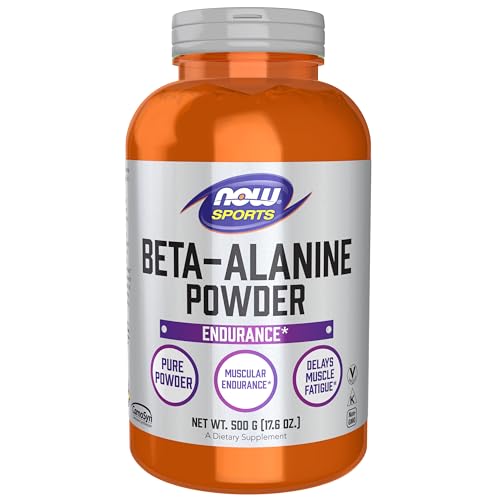
Beta-alanine is one of the more mechanistically well-understood performance supplements, working through a fairly specific and well-documented pathway: raising muscle carnosine levels, which helps buffer the acid buildup responsible for the burning fatigue sensation during high-intensity exercise lasting roughly one to several minutes.
The Carnosine-Buffering Mechanism
During intense exercise, hydrogen ions accumulate in muscle tissue, lowering pH and contributing directly to the fatigue and burning sensation associated with sustained high-intensity effort. Carnosine, a dipeptide stored in muscle tissue, helps buffer this acid accumulation, and beta-alanine is the rate-limiting precursor your body uses to synthesize carnosine — supplementing beta-alanine over time reliably raises muscle carnosine stores, which is a well-replicated finding, not a speculative mechanism.
What Duration of Exercise Benefits Most
Beta-alanine's benefit is most consistently demonstrated for high-intensity exercise in the roughly one-to-four-minute duration range, where acid buffering capacity is a meaningful limiting factor — think hard interval sets, longer sprints, or high-rep resistance training sets. It's less relevant for very short, maximal efforts (a single heavy lift, a very short sprint) where acid buildup isn't the primary limiting factor, and its benefit for pure long-duration steady-state endurance is more modest than for this specific high-intensity window.
The Tingling Sensation Explained
Paresthesia — a tingling or prickling sensation, often in the face, neck, and hands — is a well-documented, harmless response to beta-alanine at typical single doses, caused by the compound's interaction with certain nerve receptors. It's dose-dependent and can be reduced by splitting a daily dose into smaller amounts throughout the day rather than taking it all at once, or by using a sustained-release formulation if the sensation is bothersome.
Why Loading Time Matters
Unlike caffeine or citrulline, which have an acute effect within an hour of dosing, beta-alanine's benefit depends on elevated muscle carnosine levels built up over weeks of consistent daily supplementation — a single pre-workout dose on an otherwise beta-alanine-naive day provides essentially no acute performance benefit. This is a genuinely important distinction from many other pre-workout ingredients, and it's why beta-alanine only makes sense as a supplement taken daily over an extended period, not as an occasional pre-workout addition.
Effective Dosing
Research-supported total daily doses are typically in a range that, if taken all at once, would reliably cause the tingling sensation for most people — which is exactly why splitting the daily total into two or more smaller doses across the day is the more commonly recommended practical approach, achieving the same total carnosine-loading effect with less noticeable paresthesia.
Who Benefits Most
Athletes and lifters performing repeated high-intensity efforts — interval training, higher-rep resistance training, combat sports with repeated bursts of effort — are the clearest beneficiaries, given the direct match between beta-alanine's buffering mechanism and the specific fatigue type these activities produce.
Stacking With Other Ingredients
Beta-alanine is commonly combined with creatine in pre-workout and performance stacks, since the two work through complementary and non-overlapping mechanisms (phosphocreatine energy system support versus acid buffering) — a genuinely sensible combination rather than just marketing convenience, though each still requires an adequate individual dose to deliver its studied benefit.
The Bottom Line
Beta-alanine reliably improves performance in high-intensity efforts lasting roughly one to several minutes, but only with consistent daily dosing over weeks to build muscle carnosine levels — it is not an acute, single-dose pre-workout booster despite often being marketed alongside ingredients that do work that way.