⚡ As an Amazon Associate, VitalGuide earns from qualifying purchases. This helps us keep the site free.

Best Berberine Supplements 2026: Nature's Ozempic Reviewed

By Sarah Mitchell, MS, RDN · April 2026 · 14 min read

Berberine has spent decades as a relatively obscure compound in Ayurvedic and Traditional Chinese Medicine. Then social media discovered it — and suddenly “nature’s Ozempic” became one of the most searched supplement terms of 2025 and into 2026.

Is that comparison fair? Partly. Berberine does lower blood sugar, reduce insulin resistance, and modestly support weight management. But it works through an entirely different mechanism than semaglutide, and the potency comparison is not 1:1. That said, the clinical evidence for berberine’s metabolic benefits is genuinely impressive — particularly for a natural compound.

In this guide, I’ll break down what berberine actually does, who it’s for, how to take it correctly, and the five best berberine supplements available in 2026.

Related reading: For a comprehensive look at blood sugar management strategies, see our metabolic health guide covering diet, exercise, and supplementation.

What Is Berberine and How Does It Work?

Berberine is an alkaloid found in several plants including barberry (Berberis vulgaris), goldenseal, and Oregon grape. It’s been used medicinally for thousands of years, primarily for its antimicrobial and gut-regulating effects.

Modern research has identified its primary mechanism: AMPK activation. AMPK (adenosine monophosphate-activated protein kinase) is sometimes called the “metabolic master switch” — it’s the same enzyme pathway activated by exercise and the diabetes drug metformin. By activating AMPK, berberine:

  • Improves insulin sensitivity — cells become more responsive to insulin signals, reducing blood glucose
  • Lowers hepatic glucose production — reduces the liver’s tendency to dump glucose into the bloodstream
  • Activates GLP-1 secretion — stimulates the same gut hormone that GLP-1 drugs mimic (this is where the “Ozempic” comparison comes from)
  • Modulates gut microbiota — alters the gut bacteria composition in ways that appear to support metabolic function
  • Lowers LDL and triglycerides — multiple trials show significant improvements in lipid panels

A landmark 2008 study in Metabolism found berberine reduced HbA1c by 2.0% in type 2 diabetic patients — comparable to metformin. That finding has been replicated in multiple subsequent trials.

Berberine vs. Metformin vs. Ozempic

It’s worth being precise about where berberine sits compared to pharmaceutical alternatives:

Compound Mechanism HbA1c Reduction Weight Loss (avg) Prescription Required
Berberine AMPK activation, GLP-1, microbiome ~1.5–2.0% 3–5 lbs over 12 weeks No
Metformin AMPK activation (similar) ~1.5–2.5% Modest (2–5 lbs) Yes
Semaglutide (Ozempic) GLP-1 receptor agonist ~1.5–2.0% 10–15% body weight Yes

The honest assessment: Berberine is in the same league as metformin for blood sugar management in pre-diabetic and mildly diabetic populations. It is not remotely comparable to semaglutide for weight loss — the “nature’s Ozempic” framing dramatically overstates the weight-loss effect. For metabolic health and blood sugar support without a prescription, berberine is a legitimate evidence-backed option. For significant obesity-driven weight management, it is not a substitute for GLP-1 medications.

Who Should Consider Berberine?

Berberine may be worth considering for:

  • Pre-diabetics seeking to lower fasting glucose and improve insulin sensitivity
  • People with metabolic syndrome (high triglycerides, high fasting glucose, low HDL, elevated blood pressure)
  • Those with elevated LDL or triglycerides who want a non-prescription lipid management option
  • PCOS patients — berberine has comparable evidence to metformin for improving PCOS-related insulin resistance and hormonal parameters
  • Anyone using diet and exercise to manage blood sugar who wants additional support

Berberine is not appropriate as a first-line or sole treatment for diagnosed type 2 diabetes without physician oversight. It should not be used to avoid or replace prescribed medications without medical guidance.

How to Choose a Quality Berberine Supplement

Before the product picks, here’s what to look for on the label:

1. Form: Berberine HCl vs. Dihydroberberine

Standard berberine HCl is the most studied form and what most research uses. It works, but has relatively poor bioavailability — the compound is partly degraded in the gut before absorption.

Dihydroberberine (DHB) is a more bioavailable reduced form of berberine, marketed under the tradename GlucoVantage. Research suggests it achieves similar blood glucose effects at a lower dose (100–200 mg vs. 500 mg for standard berberine HCl). Early data is promising, but total clinical trial volume is lower than standard berberine HCl.

For most people, standard berberine HCl at the studied dosing protocol (500 mg, 2–3x/day before meals) is the safer starting point. DHB is worth considering for those who experience GI side effects with standard berberine or who want a lower total capsule volume.

2. Dose per capsule

Look for 500 mg per capsule — this matches the dosing used in clinical trials and allows flexible 1,000 mg/day or 1,500 mg/day protocols.

3. Bioavailability enhancers

Some formulations add black pepper extract (piperine) or phospholipid complexes to improve absorption. These can help, but aren’t strictly necessary if taking berberine correctly (20–30 minutes before meals).

4. Third-party testing

Given berberine’s potential to meaningfully affect blood glucose, choose a brand with third-party testing (NSF, Informed Sport, or equivalent) to confirm label accuracy.

Top 5 Berberine Supplements of 2026

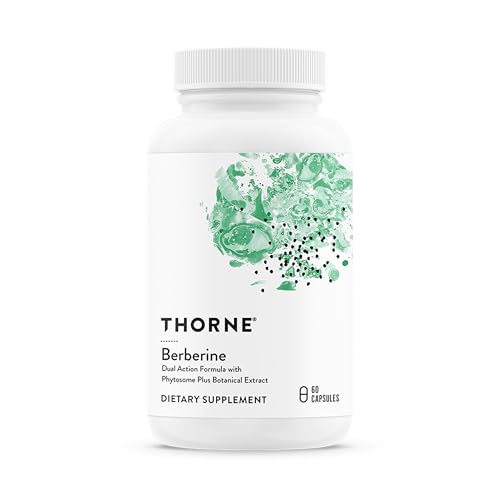
1. Thorne Berberine — Best Overall Quality

Form: Berberine HCl | Dose: 500 mg/capsule | Certifications: NSF Certified for Sport, GMP

Thorne is the gold standard for practitioner-grade supplement quality. Their berberine delivers a clean 500 mg HCl per capsule, NSF Certified for Sport, with no unnecessary fillers. It’s the supplement I point clients to when they ask for something they can confidently take alongside a physician-supervised metabolic protocol.

The price is higher than most options on this list, but the third-party certification, purity testing rigor, and Thorne’s manufacturing standards justify it for people who are using berberine therapeutically and need confidence in label accuracy.

Who it’s for: Anyone using berberine as part of a supervised metabolic protocol, athletes subject to testing, those who prioritize testing over price.


2. Nutricost Berberine HCl — Best Value

Form: Berberine HCl | Dose: 500 mg/capsule | Certifications: GMP, third-party tested

Nutricost delivers the same studied 500 mg HCl dose at a fraction of the price of premium brands. For someone who wants to follow the clinical dosing protocol (500 mg x2–3 daily) for an extended period, Nutricost makes that financially sustainable without sacrificing extract quality.

The capsules are clean — no unnecessary excipients — and third-party tested for label accuracy. This is my default recommendation for cost-conscious buyers who want effective berberine without paying a premium brand markup.

Who it’s for: Budget-conscious buyers, people trying berberine for the first time, those who plan to use it long-term.


3. Toniiq Ultra High Purity Berberine — Best Purity

Form: Berberine HCl | Dose: 600 mg/capsule | Certifications: GMP, 97%+ purity tested

Toniiq’s berberine markets itself on verified purity — they publish COAs showing their berberine HCl at 97%+ actual content, addressing concerns about underdosing that are common in the commodity supplement space.

The 600 mg dose is slightly above the standard 500 mg studied dose, which works well for a 1,200 mg/day protocol (2 capsules with 2 meals). If you’ve been disappointed by cheaper berberine products not delivering expected results, purity issues may be the culprit — Toniiq addresses that.

Who it’s for: People who’ve tried berberine with disappointing results and suspect quality issues, those who want documented purity beyond standard GMP.


4. Double Wood Supplements Dihydroberberine (GlucoVantage) — Best Bioavailability

Form: Dihydroberberine (DHB) | Dose: 100 mg/capsule | Certifications: GMP, USA manufactured

If you’ve experienced the GI side effects that some people get with standard berberine (bloating, cramping, loose stools), dihydroberberine is the alternative worth trying. DHB requires a lower dose to achieve similar metabolic effects and appears to be gentler on the GI tract due to different absorption kinetics.

Double Wood’s GlucoVantage formula delivers 100 mg DHB per capsule — the typical dose is 2 capsules (200 mg) before two meals. Early comparative research suggests 200 mg DHB achieves blood glucose response similar to 500 mg standard berberine HCl.

Who it’s for: Those sensitive to standard berberine’s GI effects, people who want maximum absorption from a lower total dose, travelers or those who prefer fewer capsules.


5. Integrative Therapeutics Berberine Complex — Best for PCOS

Form: Berberine HCl + coptis chinensis | Dose: 500 mg berberine/capsule | Certifications: NSF, practitioner-grade

Integrative Therapeutics is a practitioner-distributed brand with exceptional quality controls. Their berberine complex combines standard HCl with coptis chinensis (a traditional berberine-containing herb) to provide a slightly broader alkaloid profile.

This product is particularly well-regarded in functional medicine circles for PCOS management — several integrative physicians use it as their preferred alternative to metformin for insulin-resistant PCOS patients. The NSF certification adds confidence for those working with healthcare providers.

Who it’s for: Women with PCOS, patients working with integrative or functional medicine practitioners, those wanting a broader botanical profile.

Dosing Protocol: How to Take Berberine Correctly

Standard berberine HCl protocol:

  • 500 mg, 20–30 minutes before meals
  • Daily total: 1,000–1,500 mg (2–3 doses)
  • Start at 500 mg once daily for the first week to assess GI tolerance, then step up

Dihydroberberine (DHB) protocol:

  • 100–200 mg, 20–30 minutes before meals
  • Daily total: 200–400 mg

Timing matters

Taking berberine before meals — not with or after — maximizes its effect on post-meal blood glucose. The compound partially works by slowing glucose absorption and stimulating GLP-1 in the gut, both of which require it to be present when you eat.

Cycling recommendation

Given limited long-term data, most practitioners recommend: 8–12 weeks on → 4–8 weeks off. This is a conservative approach, not necessarily evidence of harm with continuous use.

Drug Interactions and Safety Considerations

Berberine has meaningful drug interaction potential due to its effects on liver enzymes (particularly CYP3A4 and CYP2D6):

Do not combine berberine with:

  • Blood sugar medications (metformin, insulin, sulfonylureas) — additive hypoglycemic effect, may cause dangerous low blood sugar
  • Blood thinners (warfarin) — berberine may increase anticoagulant effect
  • Immunosuppressants (cyclosporine) — berberine affects CYP3A4 and may increase drug levels
  • Certain antibiotics — theoretical interaction with antibiotics; avoid concurrent use

Consult your physician before starting berberine if you:

  • Have type 2 diabetes on any medication
  • Take any prescription medications metabolized by CYP3A4 or CYP2D6
  • Are pregnant or breastfeeding (berberine is contraindicated in pregnancy — crosses the placenta)
  • Have liver disease

Frequently Asked Questions

Is berberine the same as Ozempic?

No. Ozempic (semaglutide) is a GLP-1 receptor agonist prescription drug; berberine is a plant alkaloid that stimulates endogenous GLP-1 secretion (among other mechanisms). Both lower blood sugar and may support weight management, but through different mechanisms and with very different potencies. Berberine’s weight loss effect (~3–5 lbs over 12 weeks) is modest compared to semaglutide’s (~10–15% body weight). The comparison is attention-grabbing but misleading.

How long does berberine take to work?

Fasting blood glucose effects are measurable within 2–4 weeks of consistent use at the correct dose. Weight management effects, if any, typically become visible at 8–12 weeks. Lipid improvements (LDL, triglycerides) may take 8–16 weeks to reach maximum effect. Don’t judge berberine in the first two weeks — give it a full 8-week trial.

Can berberine cause hypoglycemia?

In healthy individuals at standard doses, berberine alone is unlikely to cause dangerously low blood sugar. However, if you’re taking berberine alongside blood glucose-lowering medications, the combined effect can cause hypoglycemia. This is the most important safety concern with berberine — always disclose use to your doctor if you’re on any diabetes medications.

What does berberine do for PCOS?

In PCOS, insulin resistance is a central driver of hormonal dysregulation — elevated insulin triggers increased androgen production, worsening symptoms. Berberine addresses this by improving insulin sensitivity. Multiple clinical trials have found berberine comparable to metformin for improving PCOS-related insulin resistance, testosterone levels, menstrual regularity, and ovulation rates.

Is berberine safe for the liver?

Standard doses (500 mg x2–3 daily) appear safe for liver function in healthy individuals in trials up to 6 months. There is some concern that higher doses or longer use could affect liver enzymes — if using berberine long-term, periodic liver function testing (AST/ALT) is reasonable, particularly if you drink alcohol regularly or have any liver history.

Final Recommendation

For most people wanting to support metabolic health and blood sugar management with a well-researched natural compound: Thorne Berberine is the safest choice for quality confidence, and Nutricost Berberine HCl is the best value for sustained daily use.

If GI side effects have been a barrier, Double Wood’s GlucoVantage (dihydroberberine) is worth the switch.

Whatever you choose, remember that berberine works best as part of a broader approach — low-glycemic diet, regular movement, and consistent sleep are all AMPK activators in their own right. Berberine amplifies what you’re already doing; it’s not a replacement for lifestyle fundamentals.

Sarah Mitchell, MS, RDN is a registered dietitian nutritionist with over a decade of clinical experience in functional nutrition. She specializes in metabolic health, blood sugar management, and evidence-based supplementation.

Disclaimer: VitalGuide participates in the Amazon Associates program. Links to Amazon products on this page are affiliate links — we may earn a commission if you purchase through them, at no extra cost to you. This article is for educational purposes only and should not be construed as medical advice. Consult your healthcare provider before starting any new supplement regimen, particularly if you are pregnant, breastfeeding, or managing a medical condition.

Related Articles

Browse all Supplement guides →

Get Weekly Wellness Tips

Join 50,000+ readers who get our weekly roundup of the best health products, deals, and evidence-based wellness advice.

๐Ÿ‘ฉโ€โš•๏ธ

Reviewed by

Sarah Mitchell, MS, RDN

Sarah is a Registered Dietitian Nutritionist with a Master's in Nutritional Sciences and over 12 years of clinical experience. She leads VitalGuide's editorial review process, ensuring every recommendation reflects current scientific evidence.

View full profile →