Chronic low-grade inflammation — often called "inflammaging" when it's tied to the aging process — is implicated as a root-cause contributor to virtually every major chronic disease: cardiovascular disease, type 2 diabetes, cancer, Alzheimer's disease, autoimmune conditions, depression, and metabolic syndrome. Unlike acute inflammation (which is essential and protective), chronic systemic inflammation quietly damages tissues over years and decades, often without producing obvious symptoms until disease is well-established.
The wellness industry has responded with an enormous and often poorly differentiated category of "anti-inflammatory" products. The reality is that some natural compounds have robust clinical evidence for reducing inflammatory biomarkers and improving clinical outcomes in inflammatory conditions; others are largely marketing. This guide focuses on the compounds with the strongest evidence base, explains how they work, and recommends specific products worth buying in 2026.
Understanding Inflammation: Acute vs. Chronic
Acute inflammation is the body's healthy, short-term response to infection, injury, or tissue damage — it's characterized by redness, heat, swelling, and pain, and it typically resolves within days to weeks as healing occurs. This type of inflammation is not what we want to suppress; it's essential for immune defense and tissue repair.
Chronic inflammation is different: it's a persistent, low-level activation of inflammatory pathways without clear resolution. Key drivers include obesity, sedentary behavior, processed food consumption, chronic stress, poor sleep, environmental toxins, and gut dysbiosis. Blood markers of chronic inflammation include elevated C-reactive protein (CRP), interleukin-6 (IL-6), tumor necrosis factor-alpha (TNF-α), and fibrinogen. Elevated CRP is one of the strongest independent predictors of cardiovascular events, and it's now easily measurable with a basic blood test.
The Best Anti-Inflammatory Supplements (Evidence-Ranked)
1. Curcumin (from Turmeric)
Curcumin is the primary bioactive polyphenol in turmeric root, responsible for its characteristic yellow color. It is one of the most extensively studied natural compounds in the world — with over 15,000 published studies — and its mechanisms of anti-inflammatory action are exceptionally well-characterized: curcumin inhibits NF-κB (the master inflammatory signaling molecule), downregulates COX-2 and LOX enzymes (the same targets as NSAIDs like ibuprofen), and activates Nrf2 (the master antioxidant regulator).
Clinical trials in humans have found curcumin supplementation to reduce CRP, IL-6, and TNF-α levels across a variety of inflammatory conditions including rheumatoid arthritis, osteoarthritis (with effect sizes comparable to ibuprofen in some trials), metabolic syndrome, and inflammatory bowel disease. A 2014 meta-analysis in Journal of Medicinal Food found significant reductions in CRP with curcumin supplementation across pooled trial data.
Critical caveat: bioavailability. Standard curcumin powder is poorly absorbed — only about 1% reaches systemic circulation. Effective supplementation requires enhanced bioavailability formulations. Look for:
- Theracurmin — nano-dispersion technology, 27x better absorption than standard curcumin
- Meriva (curcumin-phosphatidylcholine complex) — 29x better absorption, used in multiple clinical trials
- BCM-95 (CurcuGreen) — combined with turmeric essential oils, 6.9x better absorption
- Longvida — lipid-particle technology optimized for brain delivery
- Black pepper extract (piperine/BioPerine) co-administration — increases curcumin absorption by up to 20x at doses of 20mg piperine
Typical effective dose: 500–1500mg of curcumin in a high-bioavailability form, or 1000mg standard curcumin with 20mg piperine, daily.
2. Quercetin
Quercetin is a flavonoid found naturally in apples, onions, berries, and capers. It inhibits multiple inflammatory pathways — including NF-κB, MAPK, and histamine release — and has significant antioxidant, anti-allergic, and antiviral activity. Quercetin is also a potent senolytic (a compound that selectively eliminates dysfunctional "zombie" senescent cells that drive chronic inflammation) — a property that has significantly elevated its profile in the longevity research community.
Clinical evidence supports quercetin for reducing inflammatory biomarkers (CRP, TNF-α, IL-6) in metabolic syndrome, reducing allergy symptoms, improving cardiovascular risk markers, and — when combined with dasatinib in senolytic protocols — clearing senescent cells in human pilot trials. For daily anti-inflammatory use, 500–1000mg of quercetin (ideally as quercetin dihydrate or quercetin phytosome for better absorption) is the typical research range.
3. Boswellia Serrata (Indian Frankincense)
Boswellia is an Ayurvedic resin with a specific and well-characterized mechanism: it inhibits 5-lipoxygenase (5-LOX), the enzyme responsible for producing leukotrienes — a class of inflammatory mediators particularly important in asthma, arthritis, and inflammatory bowel disease. Unlike curcumin's broad NF-κB inhibition, boswellia has a more targeted action on the leukotriene pathway, which makes it especially valuable for musculoskeletal inflammation and joint pain.
Randomized controlled trials in osteoarthritis of the knee have found boswellia extract to significantly reduce pain, stiffness, and functional impairment compared to placebo, with one multi-center RCT showing effects comparable to valdecoxib (a COX-2 inhibitor NSAID). It's also been studied in Crohn's disease, ulcerative colitis, and asthma with promising results. Look for extracts standardized to AKBA (acetyl-11-keto-β-boswellic acid), the most potent anti-inflammatory boswellic acid. Effective doses range from 300–500mg of boswellia extract (standardized to 30–65% AKBA) two to three times daily.
4. Omega-3 Fatty Acids (EPA/DHA)
While omega-3s have a standalone guide on this site, they deserve mention here as among the most evidence-backed anti-inflammatory interventions available. EPA (eicosapentaenoic acid) and DHA (docosahexaenoic acid) are direct precursors to specialized pro-resolving mediators (SPMs) — including resolvins, protectins, and maresins — that actively resolve inflammation rather than merely suppressing it. Meta-analyses consistently show omega-3 supplementation (at 2–4g EPA+DHA daily) significantly reduces CRP, TNF-α, and IL-6 across diverse populations, with the largest effect sizes in individuals with elevated baseline inflammation.
5. Ginger Extract
Ginger contains gingerols and shogaols that inhibit both COX and LOX enzymes (similar to NSAIDs but milder), making it a genuinely effective anti-inflammatory with particular evidence for joint pain, exercise-induced muscle soreness, and nausea. A 2015 RCT in Phytotherapy Research found standardized ginger extract to be as effective as the NSAID diclofenac for knee osteoarthritis pain while having fewer gastrointestinal side effects. Clinical doses range from 1–3g of standardized ginger extract (standardized to 5–6% gingerols) daily.
Best Anti-Inflammatory Supplement Products (2026)
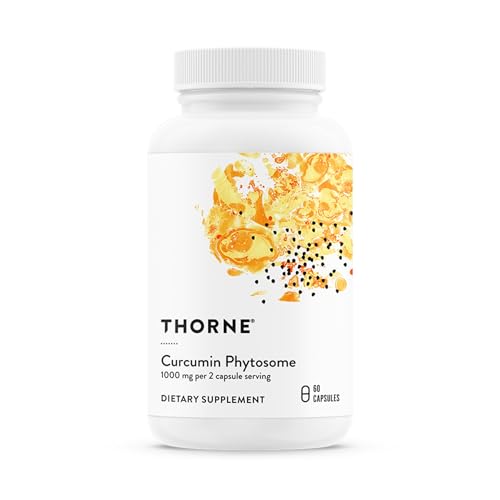
1. Thorne Meriva SF (Curcumin Phytosome)
Best Curcumin — Clinically Validated Bioavailability
Thorne's Meriva SF uses the Meriva curcumin-phosphatidylcholine phytosome — one of the best-studied enhanced-bioavailability curcumin technologies, with over 30 clinical trials using this exact ingredient. The phosphatidylcholine complex dramatically improves both absorption and lymphatic delivery, and the SF ("soy-free") version uses sunflower-derived phosphatidylcholine for those avoiding soy. Each capsule provides 500mg of Meriva complex (equivalent to approximately 200mg curcuminoids with ~29x standard bioavailability). Thorne's NSF-certified manufacturing and reputation for ingredient quality make this the premium curcumin choice.
Pros: Meriva technology (29x standard bioavailability), soy-free, NSF certified, extensively clinically studied ingredient, Thorne quality.
Cons: Premium price; complex curcuminoid content per capsule requires taking 2–3 for higher therapeutic doses.
Best for: Daily anti-inflammatory maintenance, joint health, individuals who want a clinically validated curcumin formulation.
2. NOW Foods Quercetin with Bromelain
Best Quercetin — Added Synergy with Bromelain
NOW Foods' Quercetin with Bromelain combines 400mg of quercetin with 165mg of bromelain (a pineapple-derived enzyme with its own anti-inflammatory and anti-edema effects) per capsule. Bromelain enhances quercetin absorption and adds its own clinical anti-inflammatory action — the combination is frequently studied together. NOW's GMP-certified manufacturing, transparent labeling, and consistently strong third-party testing make this a reliable choice. At a lower per-serving cost than many specialty quercetin products, it's also excellent value. Two capsules (800mg quercetin + 330mg bromelain) is the typical daily dose for anti-inflammatory and senolytic-support use.
Pros: Good quercetin dose, bromelain synergy, excellent price, NOW reliability, widely available.
Cons: Standard quercetin form (not phytosome) — absorption is decent but not maximized; bromelain addition not appropriate for those on blood thinners.
Best for: Daily anti-inflammatory support, allergy management, longevity-focused supplementers.
3. Life Extension Boswellia Elite
Best Boswellia — High AKBA Standardization
Life Extension's Boswellia Elite features a dual-boswellia combination: AprèsFlex boswellia (standardized to 20% AKBA — higher than most competitors) combined with standard boswellia extract. AprèsFlex is a patented enhanced-bioavailability boswellia ingredient backed by clinical trials demonstrating significant improvements in knee osteoarthritis symptoms within 5–7 days of supplementation. The 100mg AprèsFlex (equivalent to much higher doses of standard extract) combined with 200mg standard boswellia (standardized to 65% boswellic acids) provides broad-spectrum boswellic acid coverage. Life Extension has strong quality practices and publishes certificate of analysis data for their products.
Pros: High-AKBA AprèsFlex ingredient, dual boswellia approach, Life Extension quality practices, well-priced for a premium ingredient.
Cons: Some may prefer pure standard boswellia to avoid the complexity of mixed ingredients; AprèsFlex studies are sponsored by the ingredient manufacturer.
Best for: Joint pain, osteoarthritis, inflammatory bowel support, those who haven't responded well to other anti-inflammatory approaches.
Building an Anti-Inflammatory Stack
These compounds work through different and largely complementary mechanisms — curcumin targets NF-κB and COX/LOX, boswellia targets the leukotriene pathway specifically, quercetin addresses senescent cell accumulation and broad flavonoid pathways, omega-3s drive resolution through SPMs. Stacking them at moderate doses of each is generally more effective than a high dose of any single compound, and the combined effect on multiple inflammatory pathways is significantly broader. A practical daily anti-inflammatory stack might look like:
- 500–1000mg Meriva or BCM-95 curcumin
- 500–1000mg quercetin with bromelain
- 300mg boswellia (high AKBA standardization)
- 2–4g EPA+DHA from high-quality fish oil
The Bottom Line
Chronic inflammation is a genuine and underappreciated driver of disease progression and accelerated aging, and several natural compounds have enough clinical evidence to be meaningfully useful for reducing it. Curcumin (in a high-bioavailability form), quercetin, boswellia, and omega-3 fatty acids represent the strongest tier of evidence among natural anti-inflammatory interventions. They are not replacements for prescription anti-inflammatories in serious clinical conditions — but for the substantial population with elevated inflammatory markers, joint discomfort, or a lifestyle they're working to optimize, these compounds represent among the best-evidenced tools in the natural medicine toolkit.
Disclaimer: VitalGuide participates in the Amazon Associates program. Links to Amazon products on this page are affiliate links — we may earn a commission if you purchase through them, at no extra cost to you. This article is for educational purposes only and should not be construed as medical advice. Consult your healthcare provider before starting any new health regimen.