โšก As an Amazon Associate, VitalGuide earns from qualifying purchases. This helps us keep the site free.

๐ŸŒต Acupressure Mats: The Ancient Wellness Tool That Modern Science Is Starting to Validate

By the VitalGuide Editorial Team ยท April 2026 ยท 9 min read

An acupressure mat looks deceptively simple โ€” a foam pad covered in hundreds of small plastic "flower" discs, each with dozens of sharp points. You lie down on it, feel an initial sharp-to-warm sensation as hundreds of skin receptors are simultaneously stimulated, and 15โ€“20 minutes later, many users report a sensation of deep relaxation, warmth spreading through the back and neck, reduced muscle tension, and improved readiness for sleep.

The experience can seem almost implausible, which is why acupressure mats are one of those wellness tools that inspire equal parts skepticism and devoted daily use. The science is still catching up with the experience โ€” but what exists points to real physiological effects on pain pathways, cortisol, and the nervous system. This guide covers what's actually happening when you lie on a mat and which products are worth your money.

How Acupressure Mats Work: The Proposed Mechanisms

Acupressure mats draw from the same tradition as acupuncture โ€” the idea that stimulating specific points on the body affects energy flow and healing โ€” but also engage several well-understood physiological mechanisms:

Gate Control Theory of Pain

The gate control theory, proposed by Melzack and Wall in 1965 and still foundational to pain science, proposes that the spinal cord acts as a "gate" that modulates pain signals reaching the brain. Non-painful tactile stimulation (touch, pressure, vibration) traveling through large-diameter nerve fibers can "close the gate" to painful signals traveling through smaller fibers, reducing pain perception. The broad surface stimulation from an acupressure mat activates large mechanoreceptive fibers across the back and neck, potentially providing real pain modulation through this mechanism.

Endorphin and Oxytocin Release

Several studies have found that acupressure mat use increases plasma levels of endorphins (the body's natural pain-relieving and pleasure-inducing compounds) and oxytocin (the "bonding" hormone associated with relaxation and trust). A 2016 study from Uppsala University found that regular acupressure mat use was associated with increased oxytocin levels and reduced cortisol โ€” a stress hormone profile consistent with the relaxation many users report. The sustained skin stimulation may activate the same neuroendocrine pathways as social touch and massage.

Parasympathetic Activation

The initial sharp sensation of lying on an acupressure mat activates a significant stress response in some users. With continued use, the body typically habituates โ€” the sharp sensation gives way to warmth and relaxation as the pain response is overridden. This habituation is associated with a shift toward parasympathetic nervous system dominance: slower heart rate, deeper breathing, and reduced arousal. This is the physiological basis for the mat's reputation as a sleep and stress management tool.

Increased Local Blood Flow

The warmth spreading across the back that most users notice within 5โ€“10 minutes reflects real vasodilation โ€” increased blood flow to the skin and underlying tissues in response to the stimulation. Increased blood flow improves local tissue oxygenation and nutrient delivery, which is relevant for muscle recovery and may explain reported benefits for muscle soreness and tension.

What Does the Research Actually Show?

The evidence base for acupressure mats is smaller and less rigorous than for pharmaceutical interventions, but several findings are worth noting:

Neck and Lower Back Pain

A 2012 randomized controlled trial published in Evidence-Based Complementary and Alternative Medicine found that 2 weeks of daily acupressure mat use (20 minutes/day) significantly reduced neck and lower back pain intensity compared to a control group who rested for 20 minutes without the mat. The effect size was moderate and clinically meaningful for chronic pain sufferers. A 2020 Swedish study found acupressure mat use reduced lower back pain and fatigue in healthcare workers over 4 weeks.

Sleep Quality

Multiple smaller studies have found that acupressure mat use before bedtime improves sleep quality measures โ€” specifically sleep onset time (falling asleep faster) and subjective sleep quality. The proposed mechanism is the post-stimulation parasympathetic state and endorphin release, which create conditions conducive to sleep. For people whose sleep is disrupted by physical tension or pain, the mat may be particularly effective as a pre-sleep ritual.

Stress and Cortisol

The Uppsala University studies found that regular mat users showed reduced cortisol variability and self-reported stress levels. A 2014 study found 10 minutes of mat use produced measurable reductions in heart rate and blood pressure โ€” objective markers of reduced sympathetic nervous system activation.

Limitations of the Evidence

Most acupressure mat studies have small sample sizes, limited follow-up periods, and difficulty controlling for placebo effects. The research is promising but not definitive. That said, the risk profile is extremely low โ€” these are plastic points on a foam mat, not a pharmaceutical intervention. The cost-benefit calculation strongly favors trying one, especially for people dealing with chronic muscle tension, back pain, or sleep difficulties.

How to Use an Acupressure Mat Effectively

  • Wear a thin cotton shirt for your first few sessions โ€” direct skin contact produces more intense stimulation and is more effective once habituated, but starting clothed helps new users stay on the mat long enough for the relaxation phase
  • Sessions of 15โ€“30 minutes produce the best results; under 10 minutes may not allow enough time for the relaxation phase to develop
  • Most people see the best sleep and relaxation benefits from using the mat in the 30โ€“60 minutes before bed
  • For back pain and muscle tension: target the specific area directly; place a pillow under the mat to increase contact pressure in the lower back
  • Daily or near-daily use is where most studies and user reports show accumulating benefits; inconsistent use produces weaker results
  • Include the neck pillow that comes with most mats โ€” cervical spine stimulation addresses neck tension and headaches that the flat mat cannot reach

Best Acupressure Mats on Amazon (2026)

1. Nayoya Acupressure Mat and Pillow Set

Best Overall โ€” Most Reviewed, Proven Track Record

The Nayoya mat has accumulated over a decade of user reviews and is among the most-purchased acupressure mats on Amazon. It comes as a set with the mat and a matching cervical neck pillow โ€” the combination is more useful than the mat alone for people who carry tension in both the back and neck. The point density is appropriately high (6,210 acupressure points across 210 lotus flowers), and the foam backing is dense enough to maintain point pressure without bottoming out under body weight. For first-time buyers, this is the most proven starting point.

Pros: Complete set (mat + neck pillow), high point count, dense foam, extensive user base and reviews, available in multiple colors.

Cons: Basic aesthetics; foam quality not the highest end; carry bag included but minimal.

Best for: First-time buyers, budget-conscious users, those who want the most-reviewed option.


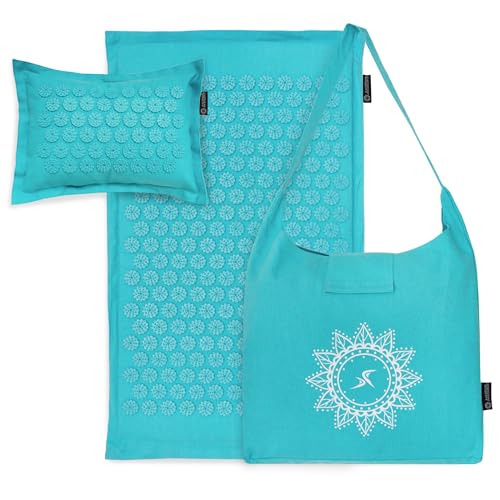
2. ProsourceFit Acupressure Mat and Neck Pillow Set

ProsourceFit is a well-regarded fitness equipment brand, and their acupressure mat reflects solid build quality at a mid-range price. The mat uses a linen cover over a high-density foam core, and the 6,210 pressure points are evenly distributed for consistent stimulation. The linen material is comfortable against skin and wicks moisture better than synthetic covers. This is a step up in material quality from entry-level mats while remaining accessible in price.

Pros: Natural linen cover (comfortable against bare skin), good foam density, complete set with neck pillow, multiple color options, ProsourceFit brand reliability.

Cons: Points are slightly softer than some higher-end alternatives โ€” may produce less intense stimulation for those who want stronger pressure.

Best for: Those who prefer natural materials; users with sensitive skin who plan to use without a shirt.


3. Shakti Mat Original Acupressure Mat

Check Price: Shakti Mat on Amazon

The Shakti Mat is the premium end of the acupressure mat market โ€” originally developed in India and made with natural cotton and non-toxic ABS plastic spikes. What distinguishes the Shakti is the sharp point quality: the points maintain their sharpness over time and provide more intense stimulation than softer plastic points, which is associated with stronger endorphin release and more pronounced results in experienced users. The mat is available in different intensity levels (Original, Light, Super) to match sensitivity preferences.

Pros: Premium build quality, natural cotton and non-toxic materials, multiple intensity options, sharp well-made points, strong reputation in the wellness community.

Cons: Higher price; sold separately from the neck pillow; intensity can be overwhelming for beginners.

Best for: Experienced users who want more intense stimulation; those who prefer natural and premium materials; wellness-focused buyers.

The Bottom Line

Acupressure mats are one of the most underrated wellness tools available โ€” inexpensive, requiring no electricity or subscription, effective across multiple conditions (back pain, neck tension, sleep, stress), and easy to integrate into a daily routine. The research is not definitive but is consistently positive, and the risk profile is essentially zero.

For most people starting out, the Nayoya or ProsourceFit set provides an excellent introduction at an accessible price. Those who take to the practice and want a more durable, premium experience should consider the Shakti Mat. Daily use before bed โ€” even 15 minutes โ€” is where the most consistent benefits accumulate.

Disclaimer: VitalGuide participates in the Amazon Associates program. Links to Amazon products on this page are affiliate links โ€” we may earn a commission if you purchase through them, at no extra cost to you. This article is for educational purposes only and should not be construed as medical advice. Consult your healthcare provider if you have any medical conditions before use.

Related Articles

Browse all Wellness guides →

Get Weekly Wellness Tips

Join 50,000+ readers who get our weekly roundup of the best health products, deals, and evidence-based wellness advice.