Resistance Training for Longevity: The Science of Strength & Lifespan

Muscle is the organ of longevity — how building and maintaining it extends healthspan, prevents disease, and determines how well you age

The Data: A landmark 2022 JAMA Internal Medicine study of 99,713 adults found that resistance training 1–2 times per week was associated with a 9% reduction in all-cause mortality and a 17% reduction in cardiovascular mortality — independent of aerobic exercise. Strength training is not just for muscles; it is medicine for lifespan.

Muscle as a Longevity Organ

Skeletal muscle is the body's largest metabolic organ — accounting for 40% of body mass in healthy adults and consuming 30% of resting energy expenditure. But muscle's role in longevity extends far beyond calorie burning:

  • Glucose disposal: 80% of post-meal glucose is taken up by skeletal muscle — more muscle mass directly improves insulin sensitivity and glucose metabolism
  • Amino acid reservoir: During illness, injury, or starvation, the body catabolizes muscle protein to provide amino acids for immune function and organ repair
  • Myokine secretion: Contracting muscle releases signaling proteins called myokines (including IL-6, irisin, BDNF, and follistatin) that coordinate whole-body metabolic health and brain function
  • Physical resilience: Strength and power are the primary determinants of fall risk — the number one cause of injury-related death in adults over 65

Sarcopenia: The Aging Muscle Crisis

After age 30, adults lose approximately 3–5% of muscle mass per decade — a process that accelerates to 1–2% per year after 50 and exponentially after 70. This progressive muscle loss, called sarcopenia, is now recognized as a clinical syndrome associated with:

  • Increased all-cause mortality (independent of cardiovascular or cancer risk)
  • Physical disability and loss of independence
  • Increased fall and fracture risk
  • Metabolic disease (insulin resistance, type 2 diabetes)
  • Increased surgical risk and poor post-operative outcomes
  • Cognitive decline (muscle-brain crosstalk via BDNF and irisin)

Resistance training is the only proven intervention that prevents, slows, or partially reverses sarcopenia at any age.

The Longevity Mechanisms of Strength Training

mTOR and Protein Synthesis

Mechanical loading activates mTORC1 — the primary anabolic signaling pathway for muscle protein synthesis. This activation is triggered by mechanical tension on muscle fibers (stretch, compression, and shear forces during resistance exercise) independently of hormonal stimulus, explaining why resistance training builds muscle even in older adults with reduced anabolic hormone levels.

Mitochondrial Biogenesis

Resistance training, like endurance exercise, activates PGC-1α — the master regulator of mitochondrial biogenesis. More mitochondria means greater aerobic capacity within muscle fibers, improved fat oxidation, and reduced metabolic stress from reactive oxygen species. Mitochondrial dysfunction is a hallmark of cellular aging; resistance training directly counteracts it.

Senescent Cell Clearance

Exercise, including resistance training, promotes the clearance of senescent cells — dysfunctional cells that accumulate with age and secrete the senescence-associated secretory phenotype (SASP), a toxic cocktail of inflammatory cytokines. Regular exercise-induced heat shock protein expression and autophagy improve senescent cell turnover, reducing the SASP burden on surrounding tissue.

Myokine Signaling

The discovery that muscle is an endocrine organ — secreting over 600 identified myokines during and after contraction — has transformed our understanding of exercise benefits:

  • Irisin: Promotes fat browning, improves insulin sensitivity, and crosses the blood-brain barrier to stimulate BDNF and hippocampal neurogenesis
  • BDNF: Released during intense exercise; the primary neurotrophic factor supporting memory, learning, and protection against neurodegeneration
  • IL-6 (from muscle): Brief anti-inflammatory burst during exercise; contrasts sharply with the chronic pro-inflammatory IL-6 from adipose tissue
  • Follistatin: Inhibits myostatin (the brake on muscle growth), enabling continued hypertrophic response to training

Grip Strength: The Simplest Longevity Biomarker

Of all strength measures, grip strength has emerged as the most powerful predictor of all-cause mortality in population studies. The landmark Lancet 2015 PURE study (143,000 participants across 17 countries) found grip strength was a stronger predictor of cardiovascular mortality than systolic blood pressure. Each 5 kg reduction in grip strength was associated with a 17% increase in cardiovascular mortality.

Grip strength is not just a proxy for general strength — it reflects the cumulative biological capital of the musculoskeletal and nervous system. Target: men should aim for ≥40 kg; women ≥28 kg (measured with a hand dynamometer at the strongest hand).

Optimal Resistance Training for Longevity

Frequency

2–3 resistance training sessions per week provides near-maximum longevity benefit. The JAMA 2022 data showed 1–2 sessions produced 9% mortality reduction; more frequent training provided diminishing returns for longevity (though greater benefits for performance and body composition).

Volume

For longevity purposes, 10–20 sets per muscle group per week is the evidence-supported range. Lower volumes (5–10 sets) are effective for older beginners; advanced trainees may benefit from the higher end. Total session volume of 3–5 exercises × 3–4 sets is a practical starting point.

Intensity

Training close to muscular failure (within 3–5 repetitions of failure) appears necessary for meaningful muscle protein synthesis signal — regardless of absolute load. This means both heavy (5–8 reps) and lighter loads (15–25 reps) can build muscle and maintain strength when taken near failure.

Exercise Selection

Compound movements that load multiple muscle groups and joints simultaneously provide the greatest hormonal response and functional strength: squats, deadlifts, rows, presses, and carries. For longevity specifically, hip hinge movements (deadlifts, Romanian deadlifts, kettlebell swings) and vertical pulling (pull-ups, lat pulldowns) should be prioritized.

Progressive Overload

The progressive overload principle — gradually increasing training demands over time — is the fundamental driver of continued adaptation. Without progression, the body adapts to the current stimulus and no longer needs to build additional muscle or strength. Track workouts and increase weight, reps, or sets regularly.

Starting Points by Age

Under 40: Build Your Baseline

Muscle mass built in youth is the primary determinant of functional reserve in old age. Even if strength training feels optional at 30, the muscle mass, bone density, and neuromuscular patterns established now are the "biological savings account" that determines quality of life at 70. Focus on fundamentals: squat, hinge, push, pull, carry.

40–60: Maintain and Protect

Anabolic hormone levels decline; recovery is slower; injury risk increases with poor mechanics. Prioritize: adequate protein (1.6–2.2 g/kg/day), compound movements, injury prevention through range-of-motion training, and consistent attendance over intensity peaks.

Over 60: Never Too Late

Studies consistently show resistance training benefits for adults into their 90s. Even 12 weeks of resistance training in previously sedentary 70-year-olds produces significant strength gains, improved balance, and better functional independence. Modifications include slower tempos, reduced range of motion around painful joints, and starting with lighter loads with focus on form.

Recommended Equipment

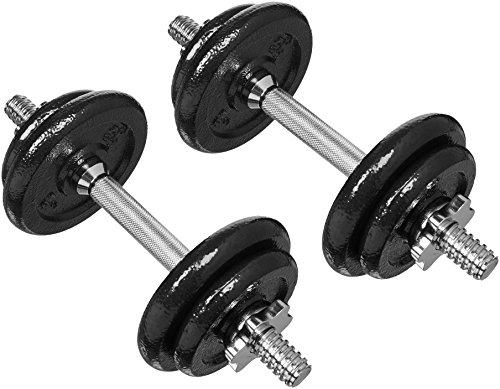
Adjustable Dumbbell Set

Best Home Investment

Adjustable dumbbells (Bowflex SelectTech, Powerblock, or NüoBell) provide the versatility of a full dumbbell rack in two handles — enabling progression across all major muscle groups for most longevity-focused programs. The single best home gym investment for resistance training.

Shop Adjustable Dumbbells on Amazon

Trap Bar / Hex Bar (for Hip Hinge Variations)

Joint-Friendly Loading

The trap bar/hex bar deadlift is the most spine-friendly and mechanically efficient deadlift variation — the load center of mass is aligned with the body rather than in front of it. This makes it ideal for older adults or those with lower back concerns who want to develop posterior chain strength safely. A fundamental longevity exercise tool.

Shop Trap Bars on Amazon

Hand Dynamometer (Grip Strength Monitor)

Biomarker Tracking

Track your grip strength as a longevity biomarker with a calibrated hand dynamometer. Regular monitoring (monthly) provides objective data on whether your training is maintaining or improving this key health metric. Jamar-style dynamometers are the clinical gold standard; several consumer models provide accurate results at a fraction of the clinical price.

Shop Hand Dynamometers on Amazon

Conclusion

The evidence is unambiguous: resistance training is among the most powerful longevity interventions available. Twice-weekly sessions throughout life are associated with measurable reductions in all-cause mortality, independent of aerobic exercise. The mechanisms — muscle as an endocrine organ, mitochondrial biogenesis, sarcopenia prevention, and insulin sensitivity maintenance — represent some of the most fundamental biology of healthy aging. There is no supplement, biohack, or pharmaceutical that approaches the breadth of benefit of consistent, progressive resistance training. Start, continue, and never stop.