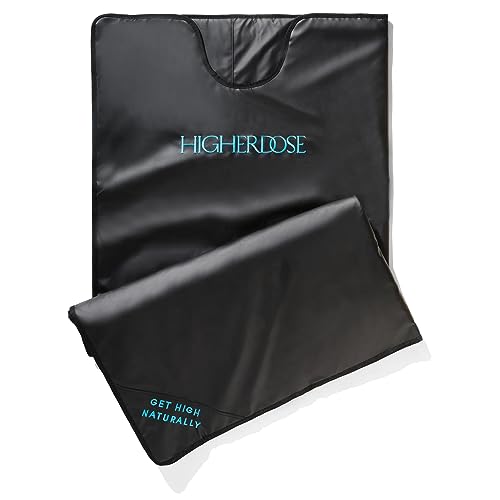
What Is an Infrared Sauna Blanket?
An infrared sauna blanket is a portable, sleeping-bag-style device lined with far-infrared-emitting heating elements. You slip inside fully clothed (or lightly clothed), zip it up, and the blanket radiates FIR wavelengths directly into your body tissue.
Unlike a conventional electric blanket, which heats the air around you, an infrared blanket heats your body directly — similar to sunlight warming your skin, but without UV radiation. Core temperature rises 1–3 °C in a 30–45 minute session, triggering the same physiological cascade as a traditional sauna: increased heart rate, vasodilation, sweating, and a post-session parasympathetic rebound.
The technology originated in Japanese clinical settings in the 1980s and became widely available to consumers in the 2010s. Prices now range from roughly $150 to $600, compared with $3,000–$10,000+ for a purpose-built home sauna cabin.
Far-Infrared vs. Near-Infrared
The infrared spectrum spans near-infrared (NIR, 700–1,400 nm), mid-infrared (MIR, 1,400–3,000 nm), and far-infrared (FIR, 3,000–100,000 nm). Consumer sauna blankets almost universally use far-infrared emitters because FIR wavelengths are optimally absorbed by water molecules in tissue, generating a deep, penetrating heat up to 4–5 cm below the skin surface.
Near-infrared devices (sometimes sold as "red light therapy" panels) work through a different mechanism — primarily photobiomodulation of mitochondria — and are not interchangeable with FIR blankets. A few premium blankets combine both, but the core heat-therapy benefit comes from the FIR component.
| Wavelength | Type | Mechanism | Typical Use |
|---|---|---|---|
| 700–1,400 nm | Near-Infrared (NIR) | Photobiomodulation | Wound healing, skin, mitochondrial support |
| 1,400–3,000 nm | Mid-Infrared (MIR) | Superficial tissue heating | Physical therapy, muscle relief |
| 3,000–100,000 nm | Far-Infrared (FIR) | Deep-tissue heating via water molecule resonance | Sauna blankets, home saunas, detox |
Evidence-Backed Benefits
Cardiovascular Conditioning
Sauna use — broadly, including FIR — is associated with meaningful cardiovascular benefit. A landmark Finnish cohort study (Laukkanen et al., JAMA Internal Medicine, 2015) found that men who used a sauna 4–7 times per week had a 50% lower rate of fatal cardiovascular events versus once-weekly users. FIR-specific studies show comparable hemodynamic responses: heart rate rises to 100–150 bpm in a typical session, providing a light aerobic stimulus.
Muscle Recovery & Soreness Reduction
Heat accelerates muscle repair by increasing blood flow to damaged tissue, facilitating nutrient delivery and metabolite clearance. A 2015 randomized trial in the Journal of Clinical Rheumatology found FIR sauna sessions reduced delayed-onset muscle soreness (DOMS) by 47% compared with passive recovery. Many elite athletes now incorporate post-training sauna sessions as a standard recovery modality.
Stress Reduction & Sleep Quality
The sharp drop in core body temperature following a sauna session mimics the natural pre-sleep temperature decline, signaling to the circadian system that it is time to sleep. A 2019 meta-analysis in Sleep Medicine Reviews found passive body heating 1–2 hours before bed reduced sleep-onset latency by an average of 9 minutes and improved sleep efficiency.
Detoxification Support
Sweat contains low but measurable concentrations of heavy metals (cadmium, arsenic, lead) and persistent organic pollutants. While sweating is not a substitute for hepatic and renal detoxification, it provides a meaningful supplemental excretion pathway. FIR saunas typically elicit more profuse sweating than conventional saunas at equivalent subjective comfort levels, potentially increasing total detox load per session.
Skin Health
FIR exposure increases dermal circulation, which can improve collagen synthesis and accelerate wound healing. Some small studies suggest FIR sauna use reduces the severity of psoriasis and acne, though larger RCTs are needed to confirm these findings.
Infrared Blanket vs. Traditional Sauna
| Factor | Infrared Blanket | Traditional Sauna (Steam/Dry) | Infrared Cabin |
|---|---|---|---|
| Cost | $150–$600 | $3,000–$10,000+ | $1,500–$5,000 |
| Space required | None (stores in a bag) | Dedicated room | 6–10 sq ft minimum |
| Heat-up time | 5–10 min | 20–45 min | 10–20 min |
| Operating temp | 35–65 °C (body surface) | 70–100 °C (ambient air) | 50–65 °C (ambient) |
| Head exposed? | Yes (head stays outside) | Yes | Yes |
| EMF concern | Varies; check ELF-EMF rating | N/A | Varies by brand |
| Portability | Excellent | None | Poor |
| Social use | Solo only | Group-friendly | 1–2 people |
The key trade-off: blankets are significantly more affordable and portable but heat only the body (not the ambient air), so the experience differs from a traditional sauna. The physiological effects — elevated core temperature, sweating, cardiovascular response — are largely equivalent when session duration and temperature settings are matched.
How to Use One Safely
Basic Session Protocol
- Hydrate first. Drink 16 oz (500 ml) of water 30 minutes before your session. You will lose 500–1,000 ml of sweat in a typical session.
- Wear lightweight, breathable clothing. Thin cotton or bamboo leggings and a long-sleeve shirt protect skin from the heated inner surface and absorb sweat.
- Preheat for 5–10 minutes before entering to reach target temperature (start at 40–45 °C; work up to 55–60 °C over several weeks).
- Session duration: 30–45 minutes. Beginners should start at 20–25 minutes and assess tolerance.
- Cool down gradually. Exit the blanket and rest for 10–15 minutes before showering. Avoid cold plunges immediately post-session if you are new to heat training.
- Rehydrate. Drink 16–24 oz water or an electrolyte beverage post-session.
Frequency Guidelines by Goal
| Goal | Recommended Frequency | Session Length |
|---|---|---|
| General wellness | 2–3 × per week | 30 min |
| Athletic recovery | 3–4 × per week (post-training) | 30–40 min |
| Sleep optimization | 3–5 × per week (1–2 hr before bed) | 20–30 min |
| Cardiovascular adaptation | 4–7 × per week | 30–45 min |
Contraindications
Consult a physician before using if you have: cardiovascular disease, hypertension (uncontrolled), pregnancy, active fever, multiple sclerosis, hemophilia, or are taking medications that impair thermoregulation (e.g., diuretics, beta blockers, anticholinergics). Do not use under the influence of alcohol.
Top Infrared Sauna Blankets
HigherDOSE Infrared Sauna Blanket V3 Editor's Pick
The HigherDOSE V3 is widely considered the gold standard in consumer infrared sauna blankets. It uses amethyst crystals, tourmaline, and charcoal layers on top of its FIR heating elements to emit negative ions alongside heat — an approach some research links to enhanced mood and oxidative stress reduction. The blanket reaches up to 71 °C (160 °F) and has 9 heat settings, giving precise control for beginners and advanced users alike. The inner lining is waterproof and easy to wipe clean, and independently tested ELF-EMF levels are low relative to competitors.
- Temperature range: 35–71 °C (9 settings)
- Layers: FIR emitter + amethyst + tourmaline + charcoal
- EMF: Low ELF-EMF (tested <1 mG at surface)
- Dimensions: 71 × 180 cm (fits up to 6 ft 2 in)
MiHIGH Infrared Sauna Blanket Best Value
MiHIGH delivers a no-nonsense FIR sauna experience at a significantly lower price point. The blanket features a waterproof inner layer, a straightforward digital controller with 9 temperature settings (up to 75 °C), and an auto-shutoff after 60 minutes for safety. It lacks the crystal/charcoal layers of premium options but produces equivalent heat and sweat output for the core recovery and cardiovascular benefits. The roll-up design stores compactly in the included carry bag — ideal for travel or small apartments.
- Temperature range: up to 75 °C (9 settings)
- Auto shut-off: 60 minutes
- Inner material: Waterproof PU + FIR emitter
- Dimensions: 70 × 180 cm
Sun Home Saunas Infrared Sauna Blanket Premium Choice
Sun Home Saunas positions its blanket at the upper end of the market, emphasizing medical-grade PU materials and ultra-low EMF output. Independent third-party testing shows ELF-EMF below 0.3 mG at the body surface — among the lowest readings in the category. The blanket integrates four distinct FIR carbon fiber heating zones (upper body, lower body, feet, arms) with independent controls, allowing precise heat targeting. At 180 cm long, it accommodates taller users comfortably and includes a removable, machine-washable cotton liner.
- Temperature range: 25–80 °C (4 independent zones)
- EMF: Ultra-low (<0.3 mG independently tested)
- Inner liner: Removable, machine-washable cotton
- Dimensions: 71 × 180 cm
What to Look for When Buying
EMF Rating
All electric heating devices produce electromagnetic fields. Look for independently tested ELF-EMF readings below 1 mG at the body surface. Many budget blankets do not publish EMF data — treat this as a red flag. Premium brands (HigherDOSE, Sun Home) provide third-party lab reports.
Temperature Range & Controls
A range of at least 35–70 °C with at least 6–8 settings gives you enough resolution to progress from beginner to advanced sessions. Digital displays are preferable to analog dials for precision. An auto shut-off at 45–60 minutes is a non-negotiable safety feature.
Inner Material
The inner surface must be waterproof (you will sweat profusely) and free of BPA, lead, and phthalates. Look for non-toxic PU or food-grade polyurethane. Blankets with removable, machine-washable liners are the most hygienic and easiest to maintain long-term.
Size
Most blankets are designed for users up to 5 ft 10 in (178 cm). If you are taller, confirm the blanket is at least 180 cm in length. Width around 70 cm is standard and comfortable for most body types.
Layer Materials (Optional)
Some blankets incorporate amethyst, tourmaline, obsidian, or charcoal layers. These are claimed to emit negative ions and enhance FIR output; the scientific evidence is limited but the materials are harmless. If budget allows, these layers are a nice addition — but the core FIR heating element is what delivers the established benefits.
Frequently Asked Questions
How often should I use an infrared sauna blanket?
Most people start with 2–3 sessions per week and progress to daily use once acclimatized. The Finnish longevity data suggests the most benefit at 4–7 sessions per week, but even 2–3 sessions deliver meaningful cardiovascular and recovery benefits. Listen to your body: if you feel fatigued, drained, or unusually sore the day after a session, reduce frequency or duration.
Is it safe to use an infrared sauna blanket every day?
For healthy adults without contraindications, daily use is generally considered safe. Ensure adequate hydration (add electrolytes if using daily), give your body 12–24 hours between sessions to fully thermoregulate, and avoid sessions lasting more than 45 minutes. If you have any cardiovascular, metabolic, or hormonal conditions, consult your physician before daily use.
Do infrared sauna blankets really help with weight loss?
The acute weight loss after a sauna session is almost entirely water weight — it returns when you rehydrate. However, FIR sauna use may contribute to fat loss indirectly: the cardiovascular stimulus burns calories (roughly 100–200 kcal per 30-minute session), and improved sleep quality and stress reduction support healthier hormone profiles (lower cortisol, better insulin sensitivity). It is a useful adjunct to diet and exercise, not a standalone weight-loss tool.
What should I wear inside a sauna blanket?
Wear lightweight, breathable clothing that covers your arms and legs: thin cotton or bamboo leggings, a long-sleeve shirt, and socks. This protects your skin from direct contact with the heated inner surface, absorbs sweat, and allows you to focus on relaxing. Avoid synthetic fabrics that trap heat without absorbing moisture.
How do I clean an infrared sauna blanket?
After each session, wipe the inner surface with a damp cloth and a mild, non-abrasive cleaner. Allow it to air dry completely before rolling or folding for storage — this prevents mold and mildew. Never submerge the blanket in water or machine wash it unless the manufacturer specifies a removable, washable liner. Spot-treat stains promptly with diluted hydrogen peroxide on a cloth.